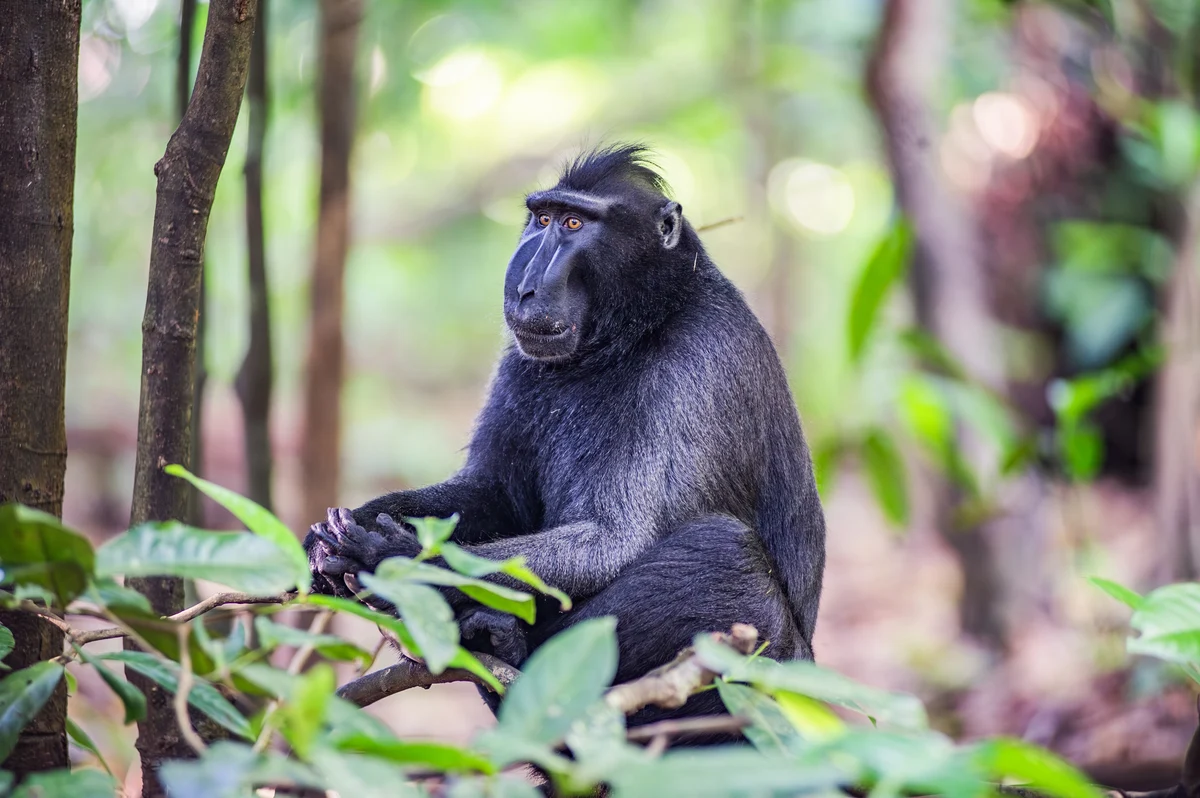
All-black, razor-intelligent, and found nowhere else on Earth — the Celebes Crested Macaque is North Sulawesi’s most charismatic primate, and Tangkoko is their last true stronghold.
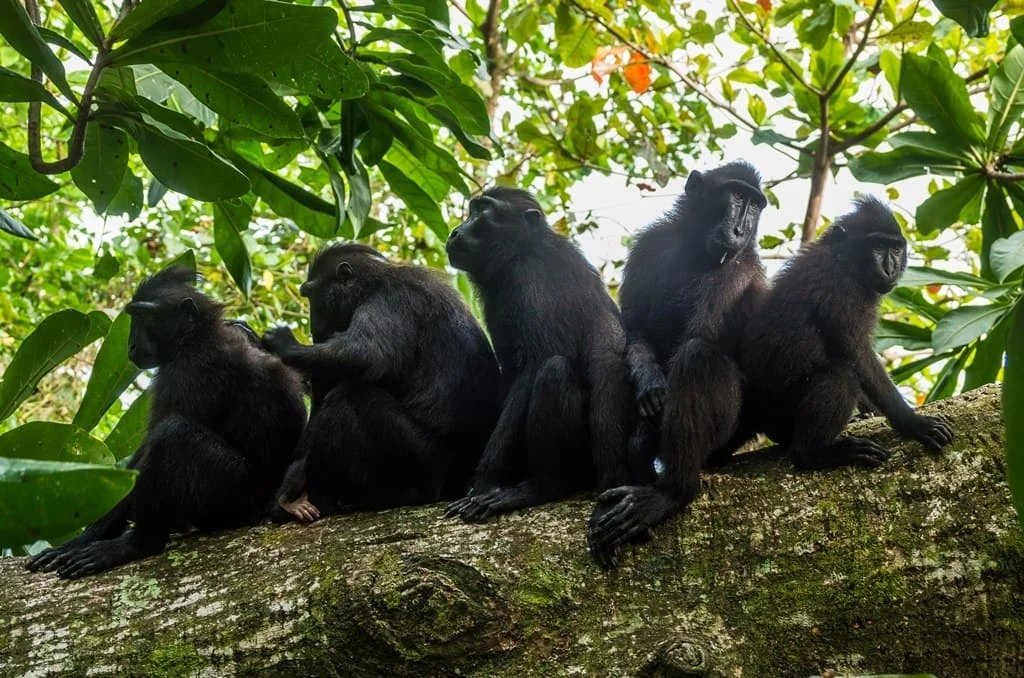
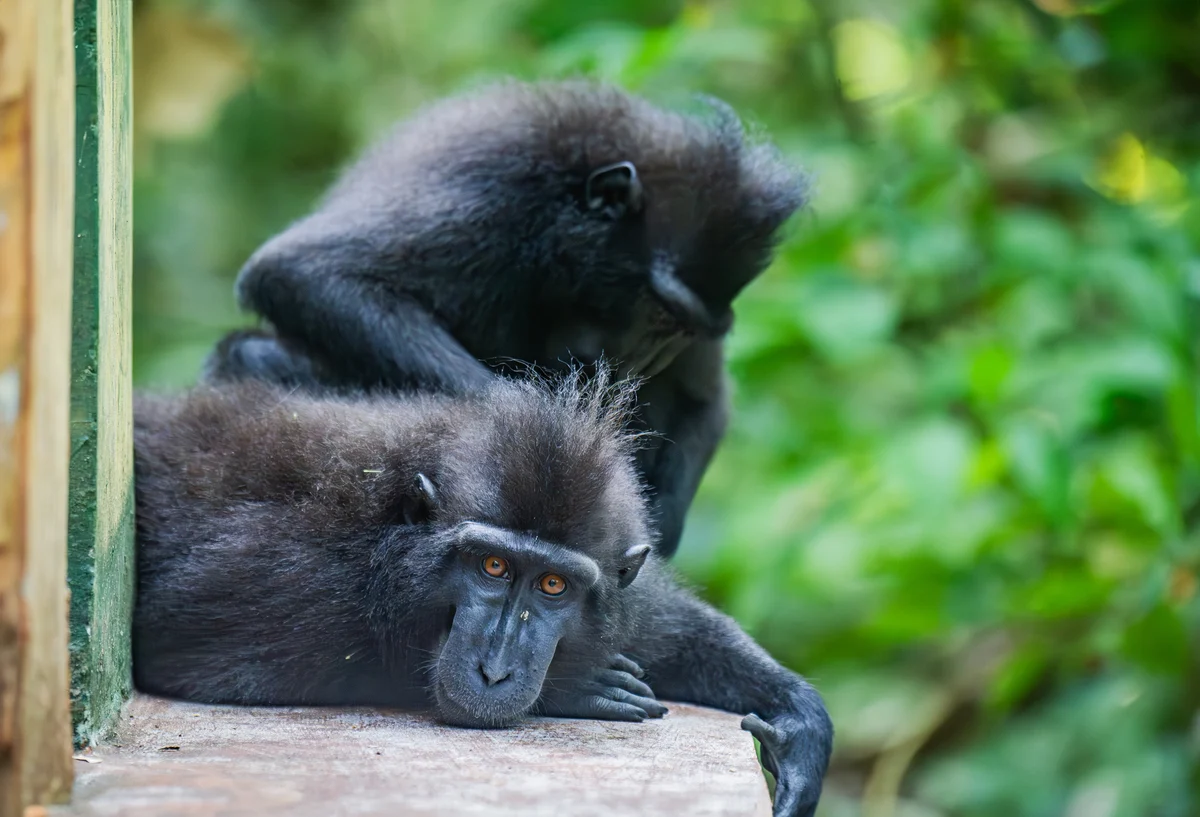
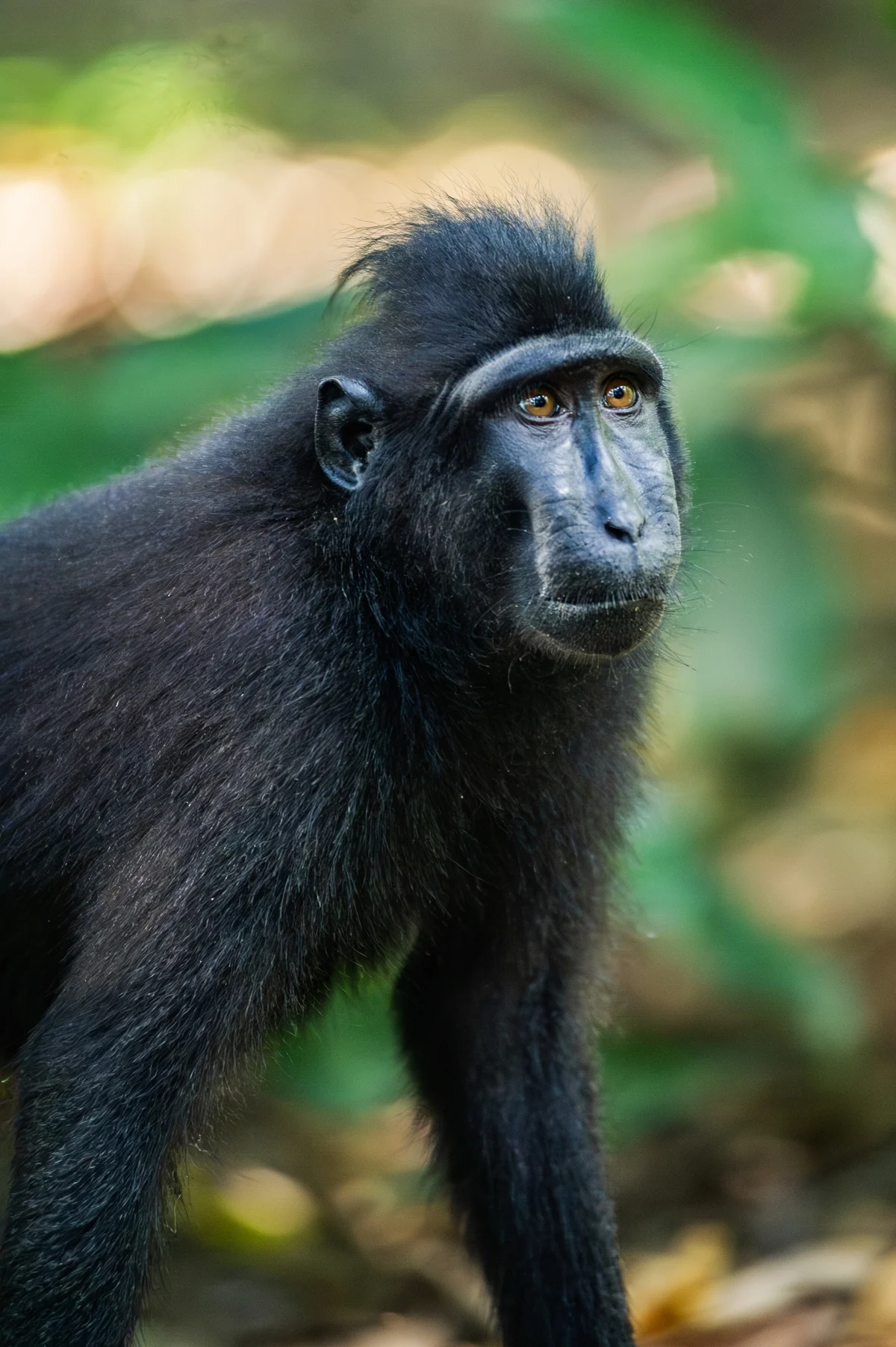
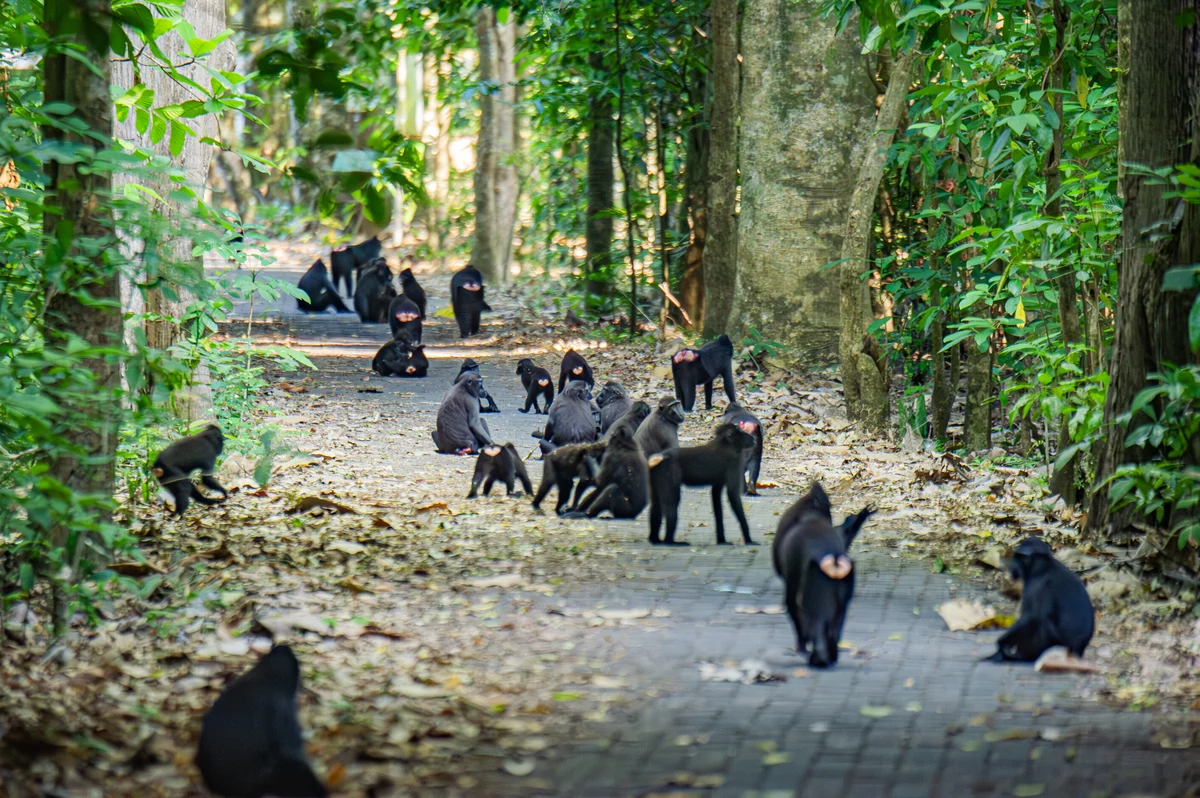
In the coastal lowland forests of Tangkoko Nature Reserve, a troop of all-black primates moves through the canopy with unmistakable confidence. They groom each other, squabble over fruit, play in the morning light, and occasionally stop to stare back at you with striking reddish-brown eyes.
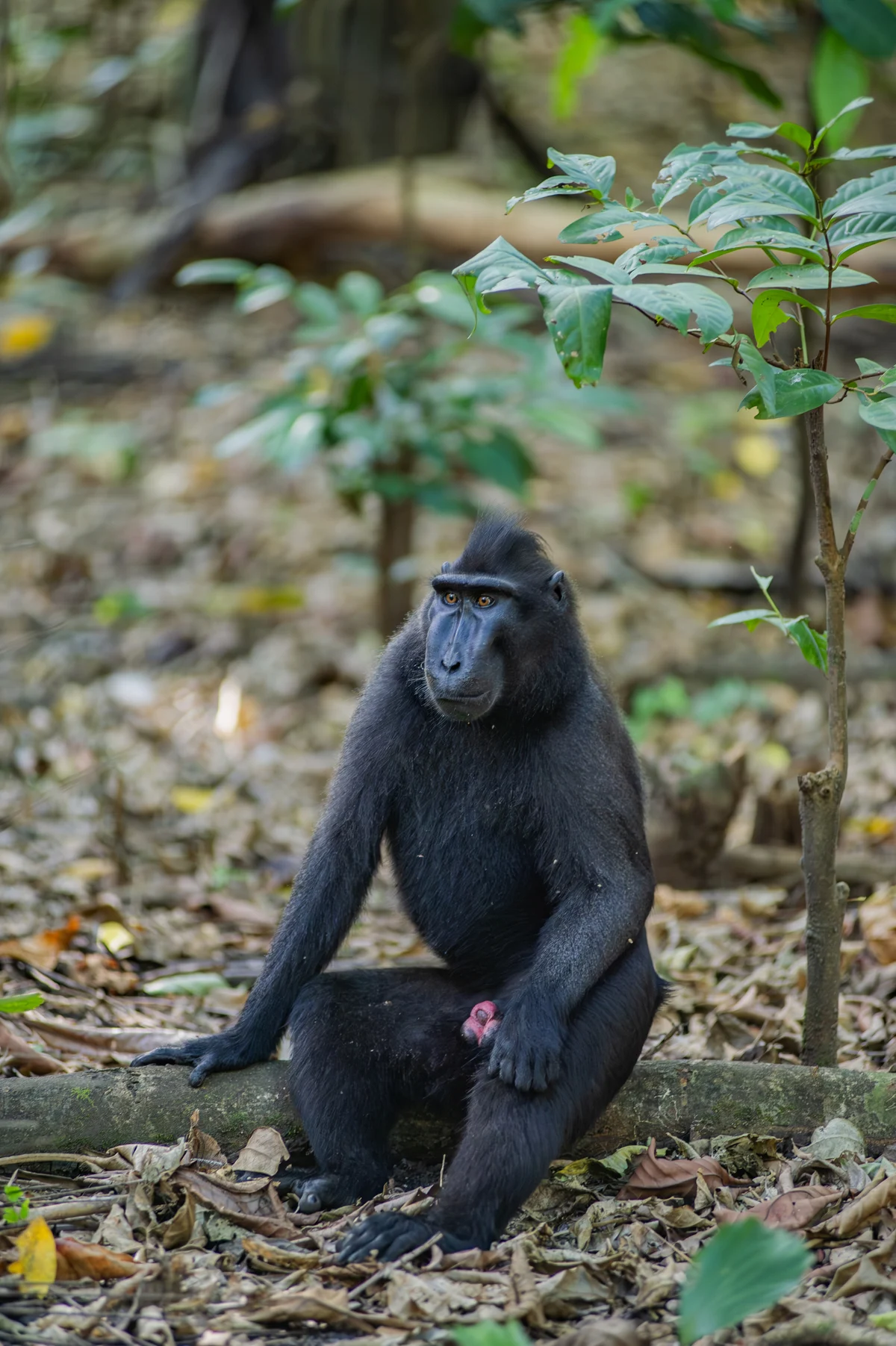
These are Macaca nigra — the Celebes Crested Macaque, known locally as Yaki or Wolai. They are endemic to the island of Sulawesi, and Tangkoko is the single most important place on Earth for their survival. Research published in the journal Oryx confirmed that the Tangkoko population is likely the only remaining viable one within their native range.
Unlike the nocturnal tarsier, Yaki are fully diurnal — active during the day, moving in large boisterous troops through the forest. This makes them one of the most rewarding wildlife encounters in all of Southeast Asia. A single morning walk in Tangkoko can yield close, extended observation of an entire troop going about their daily lives.
But their abundance in Tangkoko masks a grim reality outside the reserve. Their population declined by roughly 75% between 1978 and 1994 due to hunting and deforestation. Today, without protection, they remain one of the world’s 25 most endangered primates.
Scientific name
Macaca nigra
Local name
Yaki / Wolai
Body length
44 – 60 cm
Weight
7 – 10 kg
Troop size (Tangkoko)
25 – 75 individuals
Activity
Diurnal
Diet
Fruit, insects, leaves
Lifespan
15 – 20 years
IUCN Status
Critically Endangered
Endemic to
North Sulawesi, Indonesia
~2,000
Estimated individuals remaining in Tangkoko reserve
75%
Population decline between 1978 and 1994 across their range
145+
Fruit species recorded in their diet in Tangkoko
59%
Of each day spent moving and foraging for food
Social Behavior
What makes the Yaki so compelling to watch is their rich social world. Scientists classify them as one of the most tolerant and socially sophisticated macaque species — a Grade 4 tolerant society.
Tangkoko troops typically number 25 to 75 individuals — one of the largest stable social groups among primates. Membership is flexible, with males moving between groups while females stay with their birth troop for life.
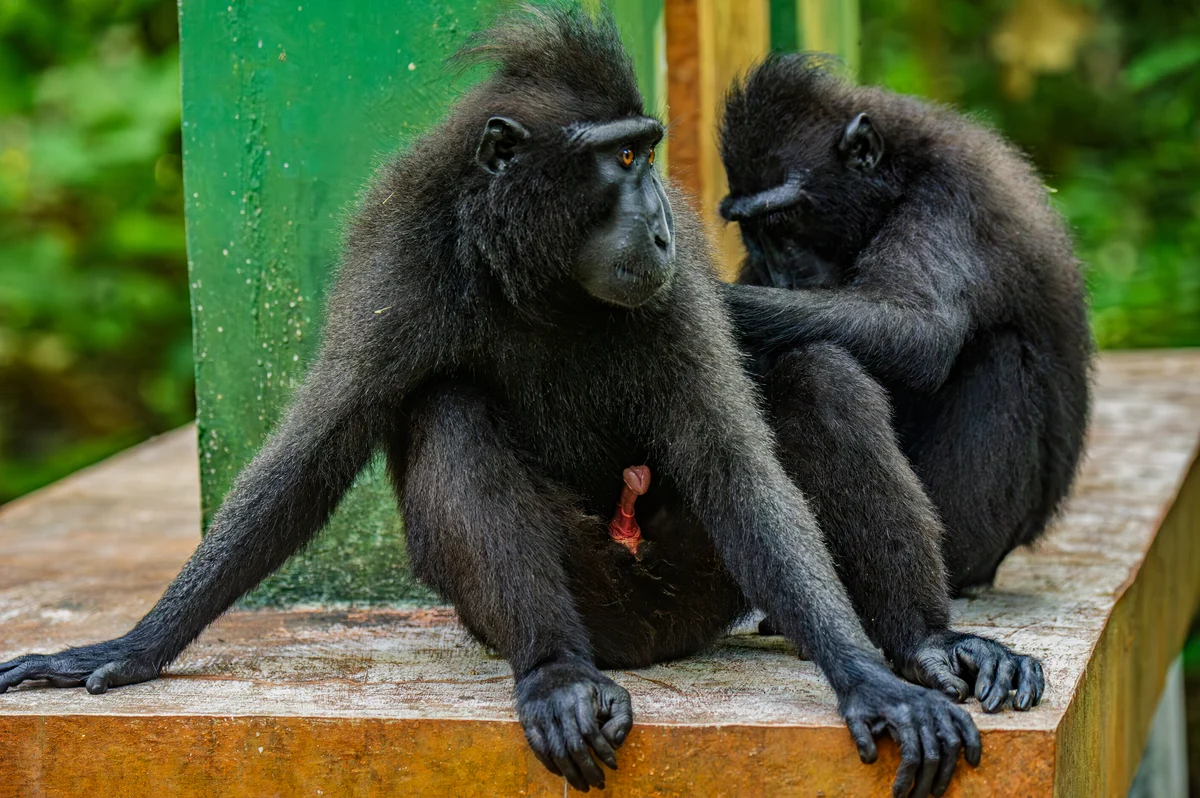
Unlike more despotic primate species, Yaki society is built on reconciliation rather than dominance. Conflicts are low-intensity and quickly resolved. Females show high social tolerance, frequently grooming and sitting in close proximity to non-relatives.
Yaki have one of the most expressive faces in the primate world, with over 20 distinct facial expressions documented. Their "bared teeth" display — which looks like a human smile — is actually a submissive or affiliative gesture, not aggression.
Infants are a focal point of troop life. Multiple females will handle, carry, and groom newborns — a behavior called allomothering. This communal care strengthens social bonds within the troop and helps juveniles learn social norms.
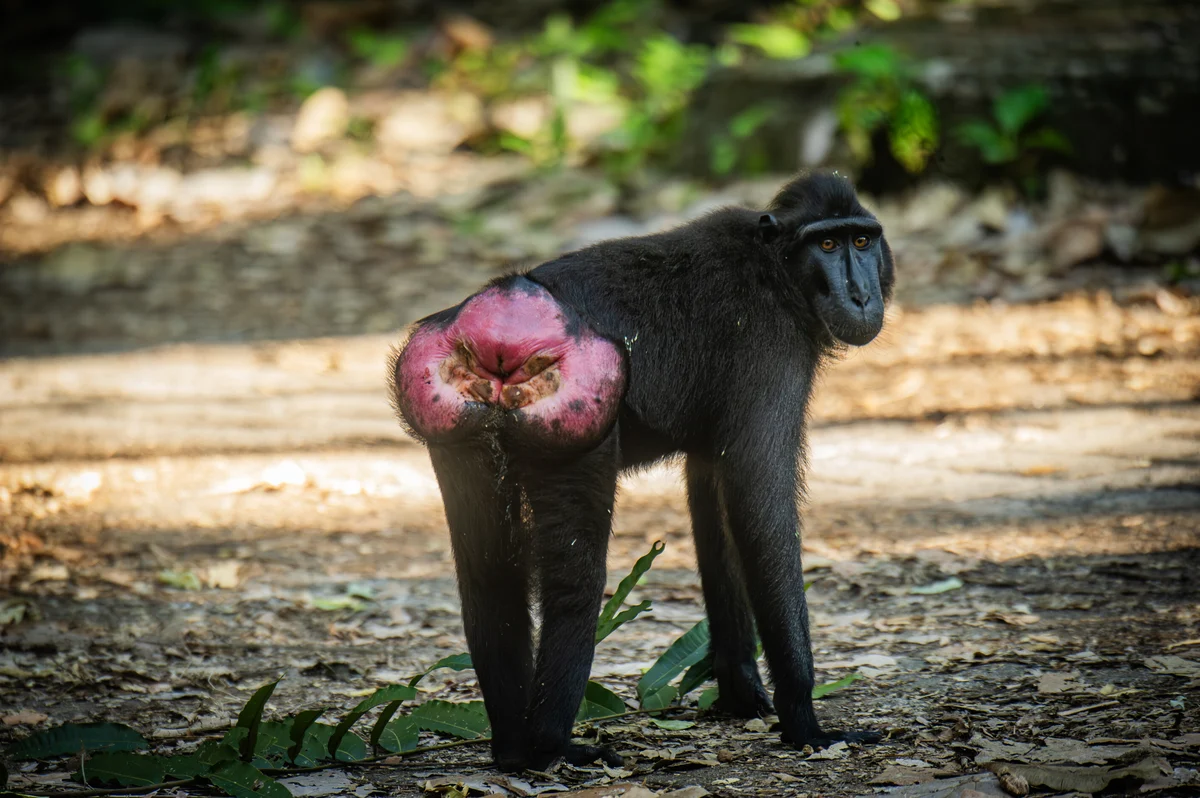
Despite their tolerance, male competition for mating access can be intense. Dominant males are not guaranteed exclusive access — a multi-male mating system means females actively choose partners, making female mate choice an important evolutionary driver.
Each troop maintains a large home range through Tangkoko's forests. Larger troops cover more ground daily and overlap more with disturbed habitat. Studies show their density correlates strongly with tree canopy cover and basal area.
Famous Moment
No species has demonstrated their intelligence — and media appeal — quite as vividly as Yaki did in 2011.
In 2011, a male Celebes Crested Macaque named Naruto picked up wildlife photographer David Slater’s unattended camera in a North Sulawesi forest and took a series of photos — including what became one of the most famous wildlife images ever taken: a wide grinning selfie that went viral worldwide.
The photograph sparked a landmark legal battle over whether an animal could hold copyright. PETA sued on Naruto’s behalf. A US court ultimately ruled that animals cannot hold copyright — but the case cemented Yaki’s global fame and drew enormous attention to their endangered status.
The selfie became a conservation gift: millions of people who’d never heard of Sulawesi suddenly knew about the Celebes Crested Macaque. It remains one of the most effective unplanned wildlife awareness moments in history.

Famous Moment
No species has demonstrated their intelligence — and media appeal — quite as vividly as Yaki did in 2011.
In 2011, a male Celebes Crested Macaque named Naruto picked up wildlife photographer David Slater’s unattended camera in a North Sulawesi forest and took a series of photos — including what became one of the most famous wildlife images ever taken: a wide grinning selfie that went viral worldwide.
The photograph sparked a landmark legal battle over whether an animal could hold copyright. PETA sued on Naruto’s behalf. A US court ultimately ruled that animals cannot hold copyright — but the case cemented Yaki’s global fame and drew enormous attention to their endangered status.
The selfie became a conservation gift: millions of people who’d never heard of Sulawesi suddenly knew about the Celebes Crested Macaque. It remains one of the most effective unplanned wildlife awareness moments in history.
Diet & Foraging
Field research conducted over 18 months in Tangkoko by O’Brien & Kinnaird documented the full dietary breakdown of Macaca nigra troops — revealing a primarily frugivorous diet with significant insect foraging.
Source: O’Brien & Kinnaird (1997), “Behavior, Diet, and Movements of the Sulawesi Crested Black Macaque”, International Journal of Primatology.
Conservation
Despite full legal protection under Indonesian law, Macaca nigra faces converging threats that have brought them to the edge of extinction outside protected areas.
Yaki meat is considered a delicacy at certain celebrations in North Sulawesi. Because they have no fear of humans — a trait that makes them wonderful to observe — they are easily approached and killed. This remains the single greatest threat outside Tangkoko.
Agricultural expansion, logging, and palm oil conversion have devastated lowland forest across their range. Outside the reserve, population density drops from ~30 per km² in Tangkoko to just ~5 per km² in unprotected areas.
Young macaques are sometimes taken from the wild to be sold as pets. Removing individuals — especially females — from a troop can collapse the group's social structure and reduce breeding success for years.
The total protected area inhabited by Celebes Crested Macaques — just 16,848 hectares across all of Sulawesi — is smaller than any other macaque species on the island. Tangkoko's 3,196 ha is their most important stronghold.
Every guided Tangkoko tour directly contributes to conservation. Tour fees support local ranger salaries, fund anti-poaching patrols, and provide income for communities whose livelihoods become tied to the forest standing — giving them a direct economic reason to protect it. The Macaca Nigra Project, active in North Sulawesi, works alongside ecotourism operators to monitor populations and run awareness campaigns.
Frequently Asked Questions
Tangkoko Nature Reserve in North Sulawesi is unambiguously the best place on Earth to observe wild Celebes Crested Macaques. The reserve holds the largest viable population and the animals are accustomed to respectful human presence, making extended observation possible.
Yes — Yaki (also spelled Wolai or Bolai) is the local North Sulawesi name for Macaca nigra, the Celebes Crested Macaque. The same animal is also called the Sulawesi Black Macaque or Black Ape (though it is not an ape). All names refer to the same species.
Habituated Tangkoko troops are generally calm around respectful visitors. However, never feed them, make direct eye contact for extended periods, or approach an infant — these can provoke defensive behavior. A trained local guide manages all interactions safely and ensures a positive experience for both you and the animals.
Unlike tarsiers, Yaki are fully diurnal — active all day. Morning walks (starting around 6–7 AM) are ideal when troops are foraging actively and light is best for photography. Troops are reliably found throughout the day in Tangkoko, making macaque sightings almost guaranteed on a guided tour.
The “black ape” nickname comes from their unusually short, almost vestigial tail — just a small stub — which makes them look tailless like a true ape. They are, scientifically, Old World monkeys (family Cercopithecidae). The name stuck locally and is still used, though it is taxonomically inaccurate.
Absolutely — and this is one of the great joys of Tangkoko. A full-day tour typically starts with a morning macaque walk, continues through the day to look for hornbills, maleo birds, and cuscus, then ends with the evening tarsier emergence at dusk. Two of the world’s most extraordinary primates in a single day.
Also on Tangkoko Tour Blog
Meet Sulawesi's other extraordinary primate — the world's smallest, with eyes larger than its brain.
A slow-moving marsupial found only in Sulawesi's ancient forests