Long before written history, the Minahasa people of North Sulawesi buried their ancestors seated upright in carved stone tombs — facing the direction they believed life itself began.
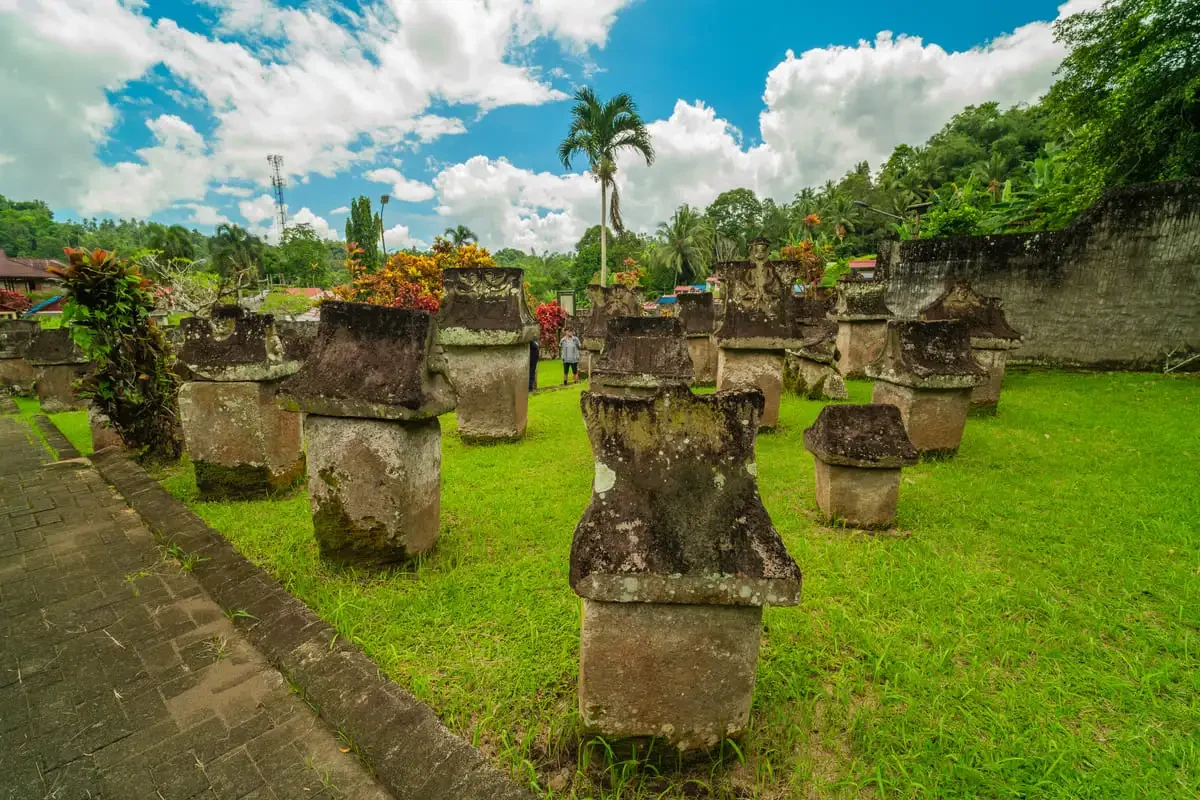
In the quiet villages of North Minahasa, rows of weathered stone boxes stand in open fields — some plain, some intricately carved, all facing the same direction. These are Waruga, the ancient stone sarcophagi of the Minahasa people, and they are unlike any burial tradition found elsewhere in Indonesia.
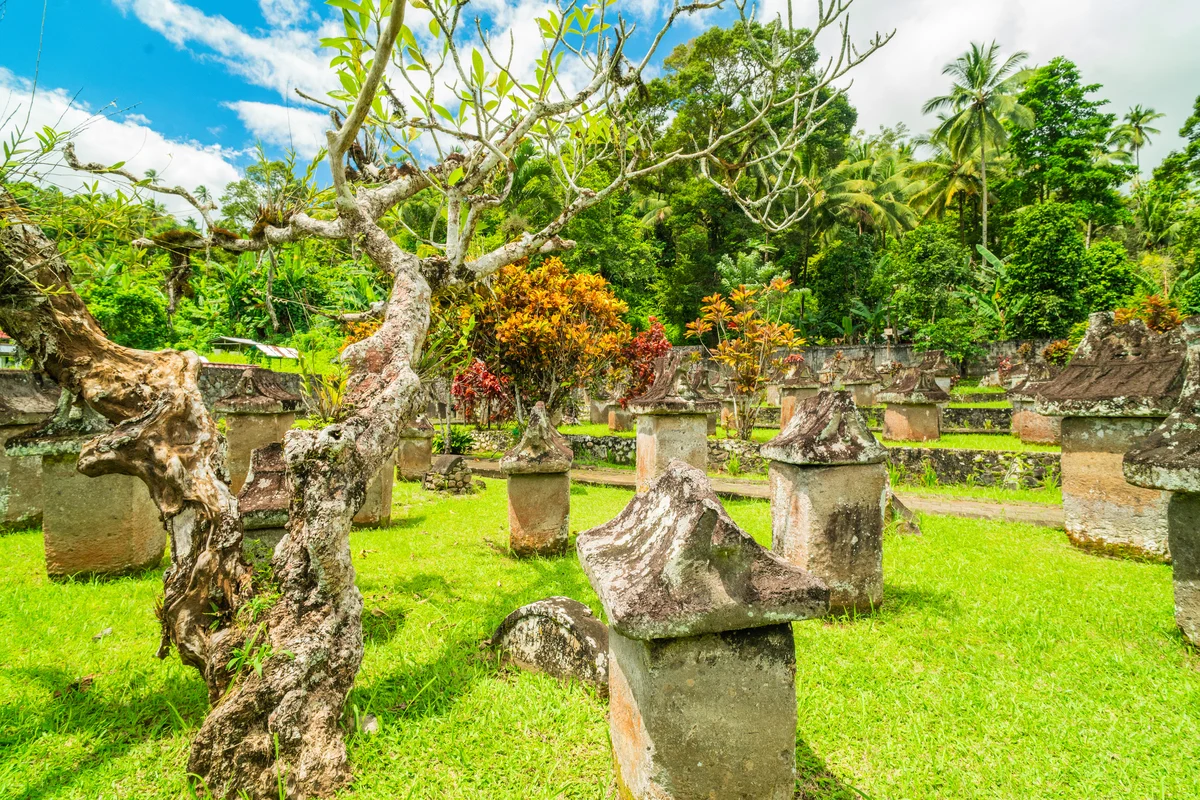
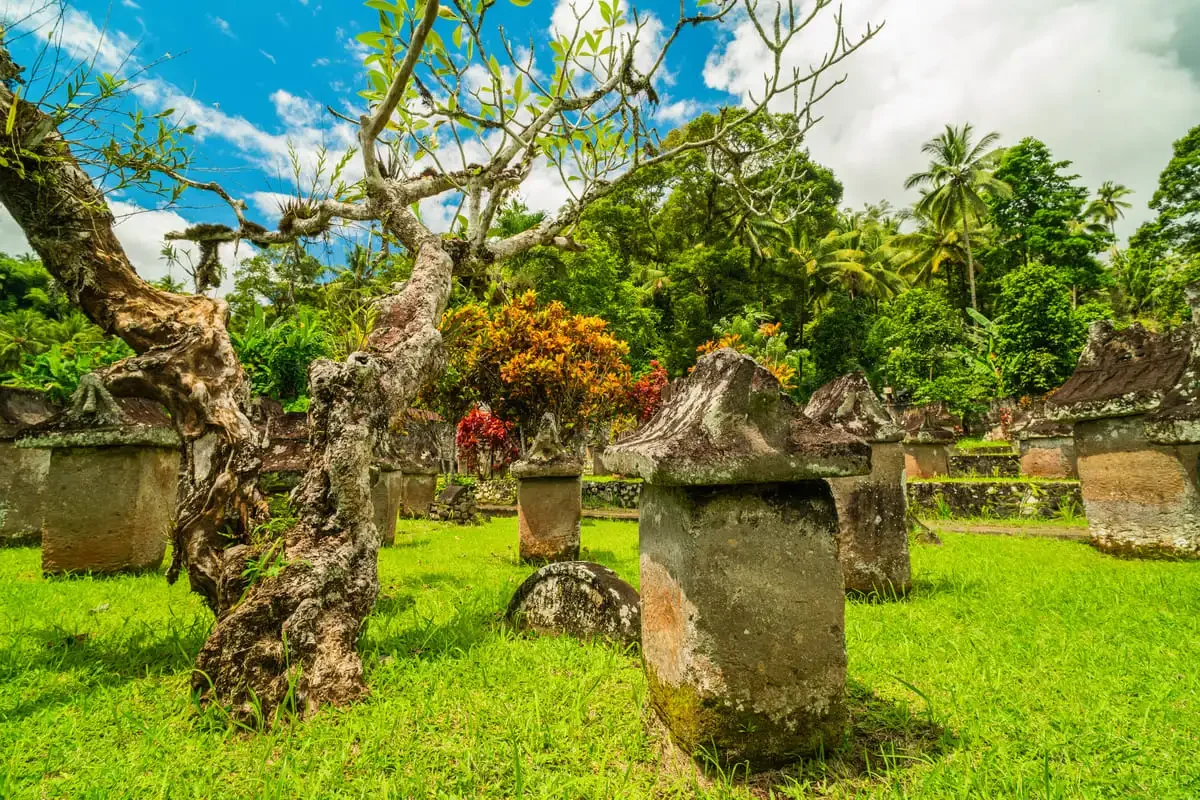
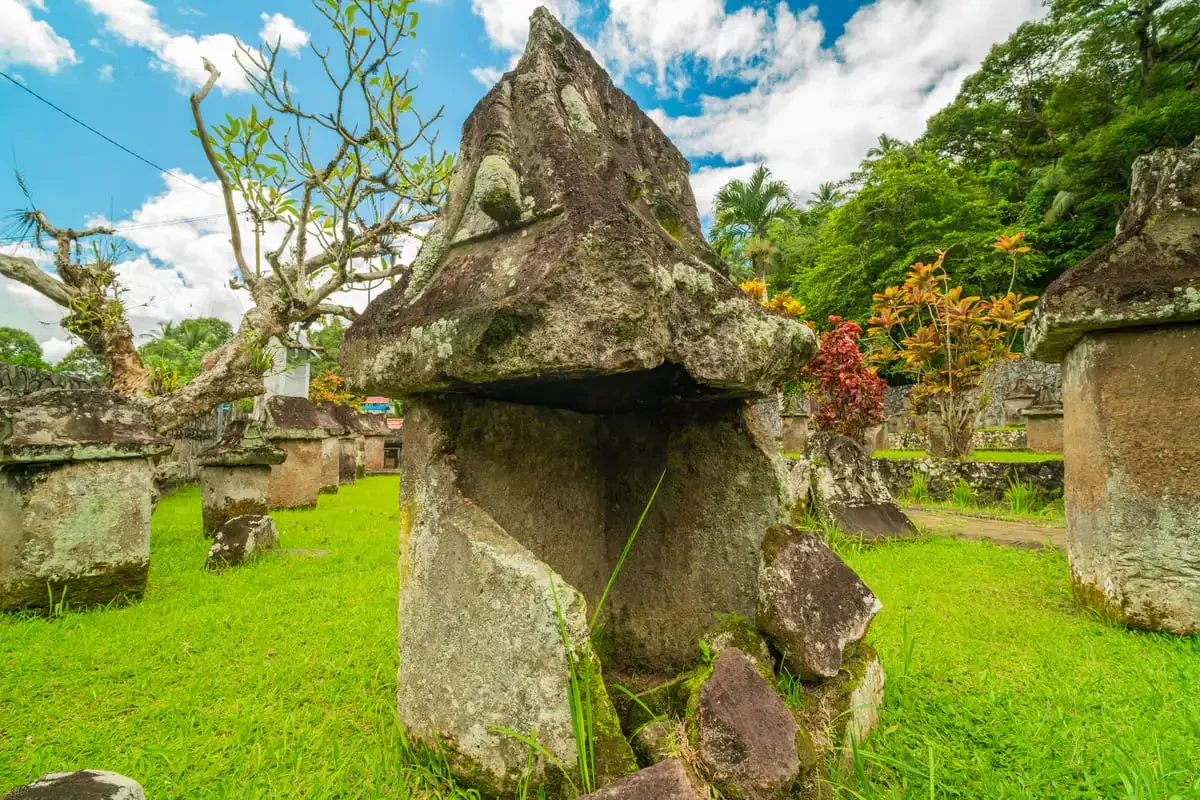
Each Waruga consists of two carved stone pieces: a hollow rectangular base and a peaked, roof-shaped lid — together resembling a small traditional house. Inside, the deceased was placed not lying down, but seated upright in a squatting position, knees drawn to the chest, head bowed toward the knees — the same posture, Minahasans believed, that a person holds in the womb before birth.
The tradition began around the 9th century and continued for nearly a thousand years, until Dutch colonial authorities banned the practice in 1828 over fears that decomposing remains were spreading cholera and typhoid. Today, hundreds of these tombs remain — some gathered into archaeological parks, others still scattered through the hills, slowly being reclaimed by the forest.
For visitors to North Sulawesi, Waruga offers something the region’s wildlife cannot: a direct, tangible connection to over a thousand years of human history. It pairs naturally with a Tangkoko wildlife tour — nature in the morning, ancestry in the afternoon.
Origin period
9th century onward
Used until
1828 (Dutch ban)
Material
Volcanic tufa stone
Burial position
Seated, facing north
Capacity
Up to 12 bodies
Total remaining
~370 in N. Minahasa
Largest site
Airmadidi Bawah (211)
Distance from Manado
~40 km / 1 hour
UNESCO status
Tentative List 1995–2015
~370
Waruga tombs still standing across Airmadidi, Sawangan, & Rap-Rap
1,200+
Years since the earliest known Waruga burials began
144
Stone Tombs gathered together at Waruga Sawangan Park
12
The maximum number of family members buried in a single Waruga
Etymology
The word itself carries deep meaning — a compound that quietly explains the entire philosophy behind the tradition.
"House" or "home"
"Body"
ogether, Waru-ruga means “house for the body” — a final dwelling, not a place of absence. Regional dialects offer variations: warugha in Tondano, baruga in Tonsea and Tombulu, and waruga in Tontemboan, the name that became most widely used. One alternative Tontemboan interpretation describes it poetically as “the house of dregs” or “the house where the body dries” — language that reflects the belief that physical decomposition was part of a spiritual transition, not an ending.
Burial Tradition
The process was not a single event but a multi-stage ritual journey, reflecting the Minahasan belief in the soul’s gradual transition to the afterlife.
The body was first wrapped in woka, a fan palm leaf, and placed in a temporary wooden coffin or directly in the ground to begin natural decomposition.
After decomposition, family members or ritual elders gathered the remaining bones — a practice known as secondary burial, accompanied by communal gatherings and incantations.
Bones were arranged inside the stone Waruga in a seated, fetal position, facing north — the direction Minahasans believed their ancestors originally came from.
Beads, ceramics, gold jewelry, and tools favored in life were placed inside as offerings for the next life, before the carved roof-shaped lid was sealed in place.
Carvings & Symbolism
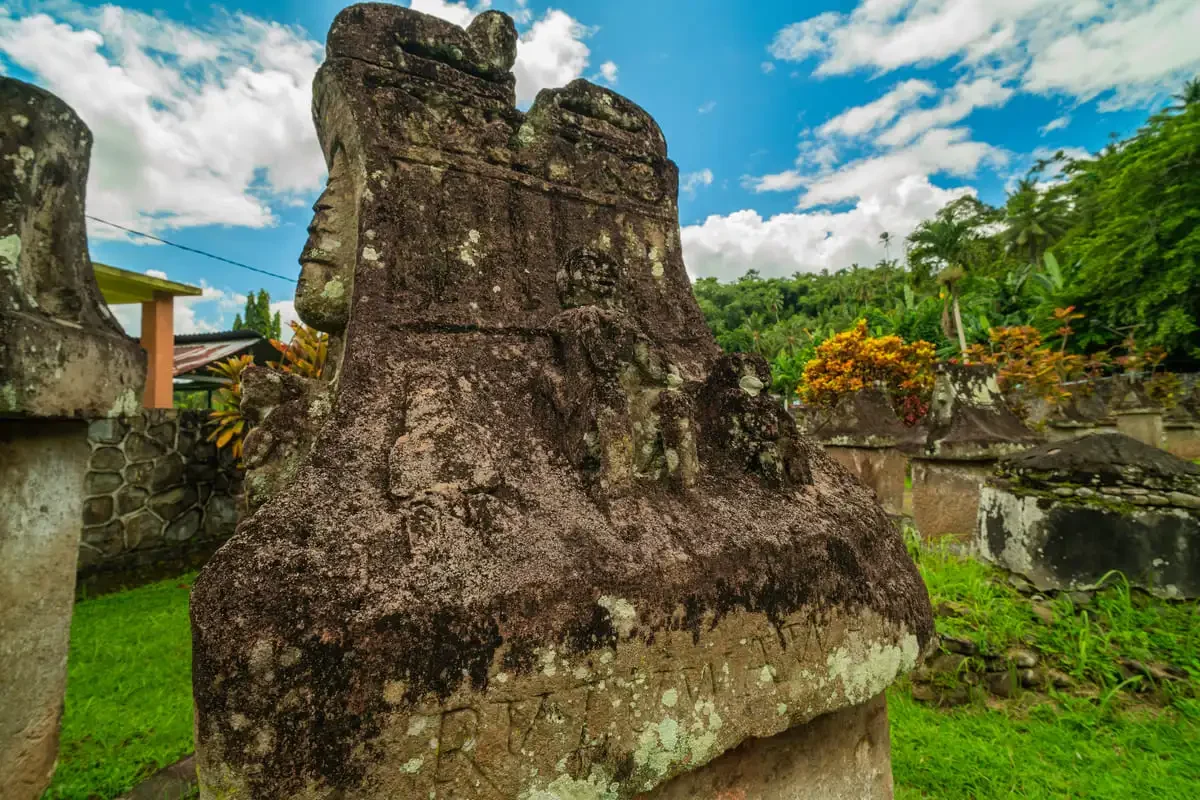
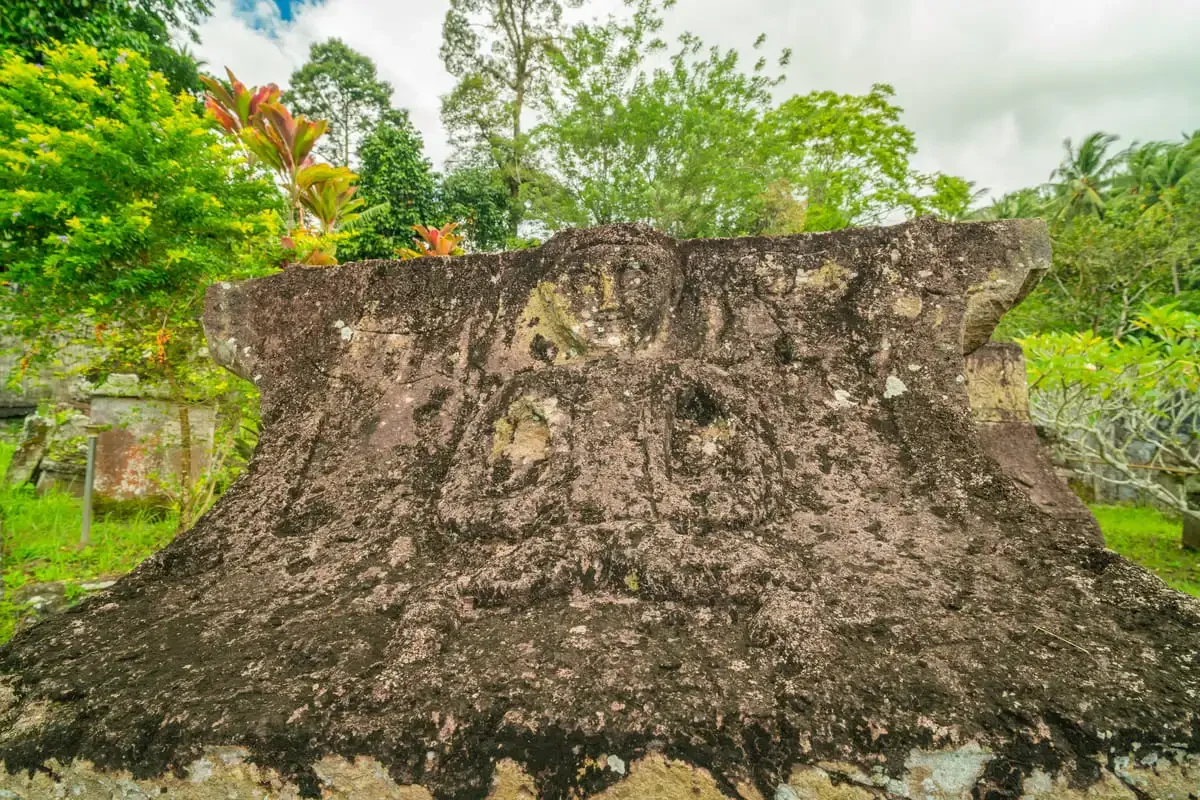
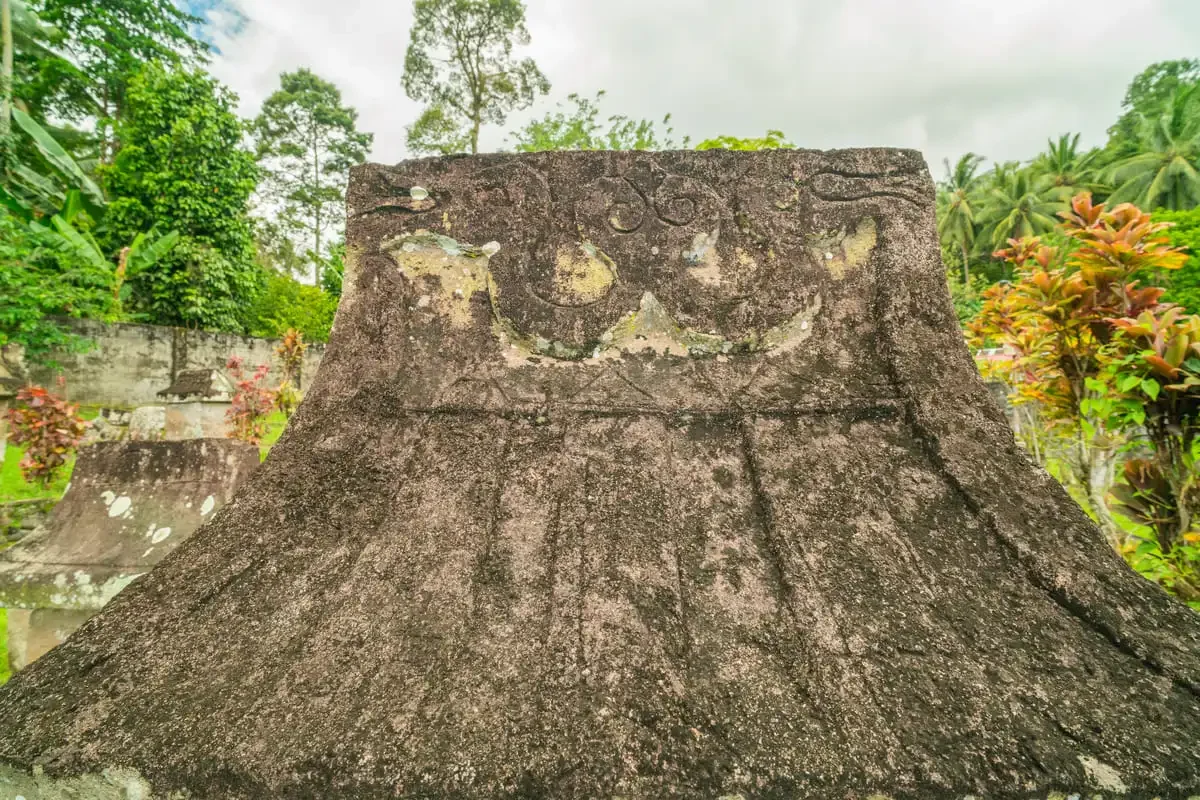
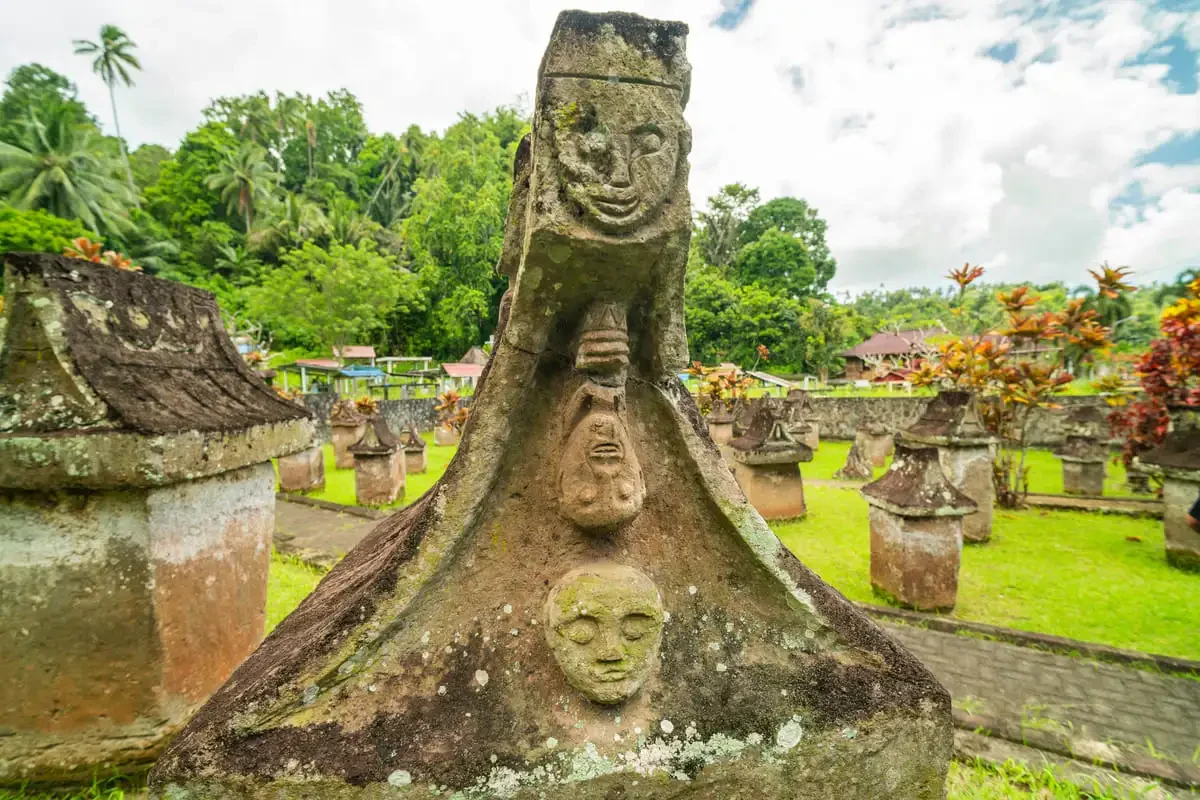
Not every Waruga is decorated — engravings were reserved mainly for individuals of higher social standing, and appear predominantly on the lid.
A carved human figure typically denoted leadership — referred to as a dotu, or clan elder/ancestor. Straddle-legged anthropomorphic motifs are among the most common decorative elements found across major sites.
A carved cow or other animal often indicated the deceased's occupation — for example, signifying a hunter. Faunal symbols are interpreted as markers of livelihood and status within the community.
Carved lines along the side of the lid recorded how many individuals — usually family members — were interred within a single Waruga, with capacities reaching up to twelve people per tomb.
Subtle gendered detail appears in carved hand posture: a clenched fist typically represented a woman, while interlocking fingers represented a man — a small but consistent convention across many sites.
Some of the most ornate Waruga, particularly at Airmadidi, feature horned deity-like figures believed to symbolize fertility and ancestral protection within Minahasan cosmology.
The majority of Waruga are simple, unadorned box-like containers 25–100 cm in height. Decoration was the exception, not the rule — reserved for the most notable members of the community.
Where to Visit
All major Waruga sites are concentrated in North Minahasa Regency, within easy reach of Manado — making them a natural half-day add-on to a Tangkoko wildlife tour.
The most famous and well-organized site, where scattered Waruga from surrounding villages were gathered into a single park in 1817, then formally established as a heritage park in 1978. Visited by foreign royalty including Queen Beatrix of the Netherlands.
The single largest concentration of Waruga in North Sulawesi, featuring some of the most ornately carved examples — including the horned anthropomorphic figures associated with fertility and protection symbolism.
A smaller, quieter site offering a more intimate, less-visited encounter with the Waruga tradition — ideal for travelers who prefer a contemplative pace over a crowded park.
Colonial History
The practice that had endured for nearly a thousand years came to an abrupt halt in the 19th century — not from cultural abandonment, but colonial intervention.
As Dutch colonial control expanded through Minahasa, authorities grew alarmed by outbreaks of cholera and typhoid, which they attributed to the practice of keeping decomposing remains in above-ground stone tombs near residential areas. In 1828, the colonial government formally banned new Waruga burials.
The decline accelerated alongside the spread of Christianity through the region, which favored Western-style ground burial over the traditional seated stone interment. By the early 20th century, the practice had effectively ended — though the existing tombs remained scattered through villages for another century before conservation efforts began gathering them into protected parks.
In 1995, Waruga sites were added to UNESCO’s World Heritage Tentative List, recognizing their global cultural significance — though the listing was later removed in 2015. Today, the surviving Waruga stand as one of Indonesia’s most distinctive megalithic heritage sites, alongside the more widely known Toraja stone traditions of South Sulawesi.
Visitor Guide
Waruga sites remain sacred ancestral burial grounds, not purely tourist attractions. A few simple guidelines ensure a respectful, rewarding visit.
Avoid revealing clothing out of respect for the sacred nature of the site.
Many are over a thousand years old and irreplaceable.
This is a burial ground for real ancestors of living Minahasan families, not a theme park.
Most sites have no on-site signage or explanations — a knowledgeable local guide brings the carvings and history to life.
at most sites, and a great way to document the unique stonework — just remain respectful while doing so.
Frequently Asked Questions
A Waruga is an ancient above-ground stone sarcophagus traditionally used by the Minahasa people of North Sulawesi. The body was placed in a seated, fetal position inside a carved stone box topped with a roof-shaped lid — together resembling a small house.
The tradition dates back to at least the 9th century and continued until 1828, when Dutch colonial authorities banned new burials over fears of disease transmission from decomposing remains. Some of the oldest surviving examples are dated to around AD 800.
The two largest collections are Waruga Sawangan (144 tombs) and Airmadidi Bawah (over 200 tombs), both about 40 km — roughly an hour’s drive — from Manado in North Minahasa Regency. A smaller site exists at Rap-Rap.
Most Waruga sites have no official entrance fee and are open during daylight hours. However, there is little to no on-site signage or guide service, which is why visiting as part of a guided cultural tour adds significant value to the experience.
Yes — Waruga makes an excellent half-day add-on to a Tangkoko tour. Many travelers combine a morning or afternoon Waruga visit with a full Tangkoko wildlife day, pairing North Sulawesi’s natural and cultural heritage in a single itinerary. Ask us about combined packages.
They share a broad family resemblance as Indonesian megalithic burial customs involving stone, but the traditions are distinct. Toraja in South Sulawesi is known for elaborate funeral ceremonies and cliffside grave sites, while Minahasan Waruga centers on the carved seated-burial stone sarcophagus — a unique cultural expression specific to North Sulawesi.